The first time you take a boat out on the Broads, a lot happens at once. The engine note changes, the bank starts sliding past, and a swan you'd assumed was decorative turns out to have strong opinions about your route. It isn't hard — people with no experience do it every summer — but it is genuinely different from driving, and a little preparation is the difference between a lovely afternoon and a tense one.
Here's how to hire a day boat, handle it well, and come back to the yard with everyone still speaking to each other.
Start with the right stretch of water
Where you hire from matters more than which boat you hire. For a first outing, pick a wide, relatively quiet stretch with somewhere easy to stop for lunch. The Yare around Brundall and Reedham is broad and calm, with decent pubs. The Bure between Wroxham and Horning is prettier and busier — more boats, more wash, more to look at. The Ant is narrow, beautiful and much more demanding; save it for trip two.
Ask two questions before you book:
- Is this stretch tidal? The Yare, the Waveney and the lower Bure rise and fall. Tides aren't dangerous here, but they change how a boat sits at a mooring and which way it wants to drift.
- What can this boat get under? Wroxham Bridge and Potter Heigham Bridge are famously low. Most day boats can't pass either, and that's fine — there's plenty of water on the near side. Never assume you'll fit; the yard will tell you exactly what your boat clears.
What you're actually hiring
A Broads day boat is a small, open, slow craft, usually seating four to eight people, with an outboard or a small inboard engine. No licence is needed and no experience is expected. Most yards supply life jackets, and children should wear them — insist on it, even on a sunny afternoon in a quiet dyke.
Fuel is often handled as a deposit, with you paying for what you burn. That's another reason not to floor the throttle: these boats are happiest at a gentle plod, and you'll enjoy the day more.
When you phone or book online, it's worth asking:
- How many people does the boat comfortably seat, with backs?
- What's the bridge clearance?
- Is there a bow thruster, and does it work?
- What's on board — boat hook, bucket, mooring lines, a quant pole?
- What time is the boat due back, and what happens if we're late?
- Can someone come out with us for the first few minutes if we're nervous?
That last one is asked far less often than it should be. Many yards are happy to do it, especially early in the season.
The handover briefing is not a formality
A member of staff will walk you through the controls before you leave. Listen properly. Ask them to show you how to stop, not just how to start. Watch how the throttle and the gear lever work together — on most day boats, neutral is a distinct position between ahead and astern, and finding it quickly is the single most useful skill you'll learn all day.
Clip the kill cord to your wrist or life jacket and keep it there. If you stand up or move about, the engine stops, which is exactly what you want.
Ask where the tide is going, how deep the water is on your intended route, and where the nearest free 24-hour moorings are. Then ask one more thing: "What should I do if the engine cuts out?" The answer will usually be "call us on the number in the folder" — make sure you know where that number is.
Setting off, and the one thing that catches everybody
Cast off slowly, keep fenders down until you're clear of other boats, and resist the urge to head straight for the busiest moorings in the village. Give yourself twenty minutes of open water first.
Boats have no brakes. That's the whole lesson. To slow down, you pull the throttle back to neutral and let momentum drain away, and that takes several boat lengths. To stop, you put it briefly into astern. So everything you do — turning towards a mooring, approaching a bridge, passing a moored cruiser — you do earlier than feels natural. If you're reacting, you're already late.
Think three lengths ahead, not three feet.
Once you're moving, notice how the boat drifts sideways in the wind and how long it takes to answer the wheel or tiller. Every boat is different, and the first ten minutes are for learning yours.
Passing boats, and the rules that actually matter
There are only a handful, and they're easy to remember:
- Keep to the right when meeting another boat head-on.
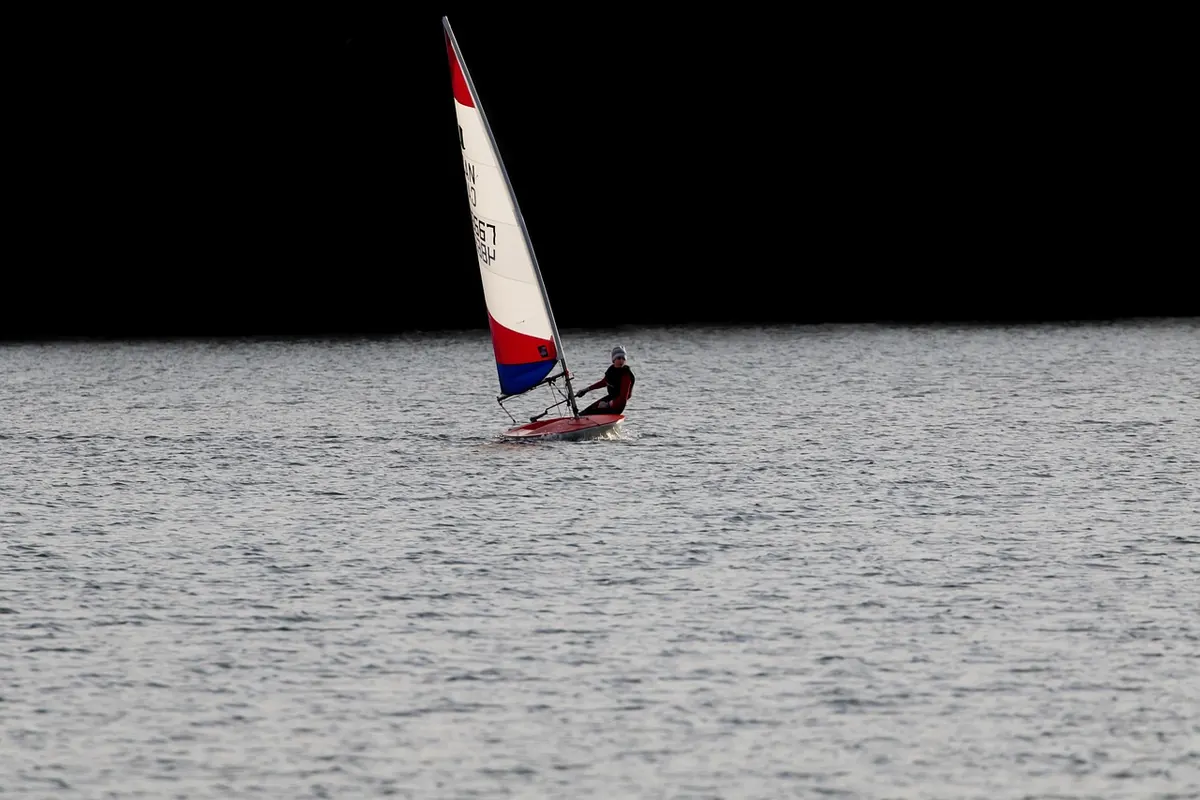
- Give way to sail. Sailboats can't stop or steer well. Slow down, keep well clear, and stay out of their wind.
- Observe the speed limit — around 4mph on most of the Broads, which is walking pace. If you're making a breaking wash, you're going too fast.
- Slow to a crawl past moored boats, anglers, canoes and anyone working on the bank.
- Wash costs money. It erodes the banks, and the Broads Authority notices.
Overtaking is rare and rarely worth it. If you must, pass on the left, slowly, with plenty of room.
Tight spots: bridges, moorings and mishaps
Bridges
Line up well back, centre yourself on the arch or the marked channel, and go through at a steady crawl. Never stop under a bridge. If another boat is coming the other way, wait. If you're unsure whether you'll fit, you almost certainly won't.
Mooring
Approach into the wind or the current, whichever is stronger — that's your brake. Fenders out on the side you're landing. Send one person ashore with a line once you're close, and have them loop it round a post rather than trying to hold the boat by hand; it should be secured on the boat, not on a person. Don't moor on private frontage, in a no-mooring spot, on a bend, or anywhere that blocks the channel. Public staithes and the Broads Authority's short-stay moorings are fair game.
If something goes wrong
Run gently aground and the answer is almost always patience. Stop, put it in reverse, ease off. Broads mud is soft, and a boat hook or quant pole will usually walk you free. Tidal water will lift you if you wait. Don't get in the water to push.
If the engine dies, check the kill cord first, then neutral, then fuel. You'll drift, so get a line ashore or drop anchor before you start diagnosing. If anyone ends up in the water, kill the engine before anything else, then get them out and warm — cold water shock is real and quick. If someone has swallowed water or seems unwell, call 999 and seek proper medical advice.
The short version
Book ahead in summer, choose an easy stretch for your first trip, and listen at the handover. Keep to the right, keep to walking pace, give way to sail, and slow down everywhere it feels polite to. Approach everything earlier than you think you need to, and moor into the wind.
Do that and the Broads does the rest. It's one of the few places in the country where a complete beginner can take charge of a boat and be genuinely competent within an hour — and where the reward for going slowly is a heron, a kingfisher and a very good pub at the end of it.
Photo: TheOtherKev / Pixabay