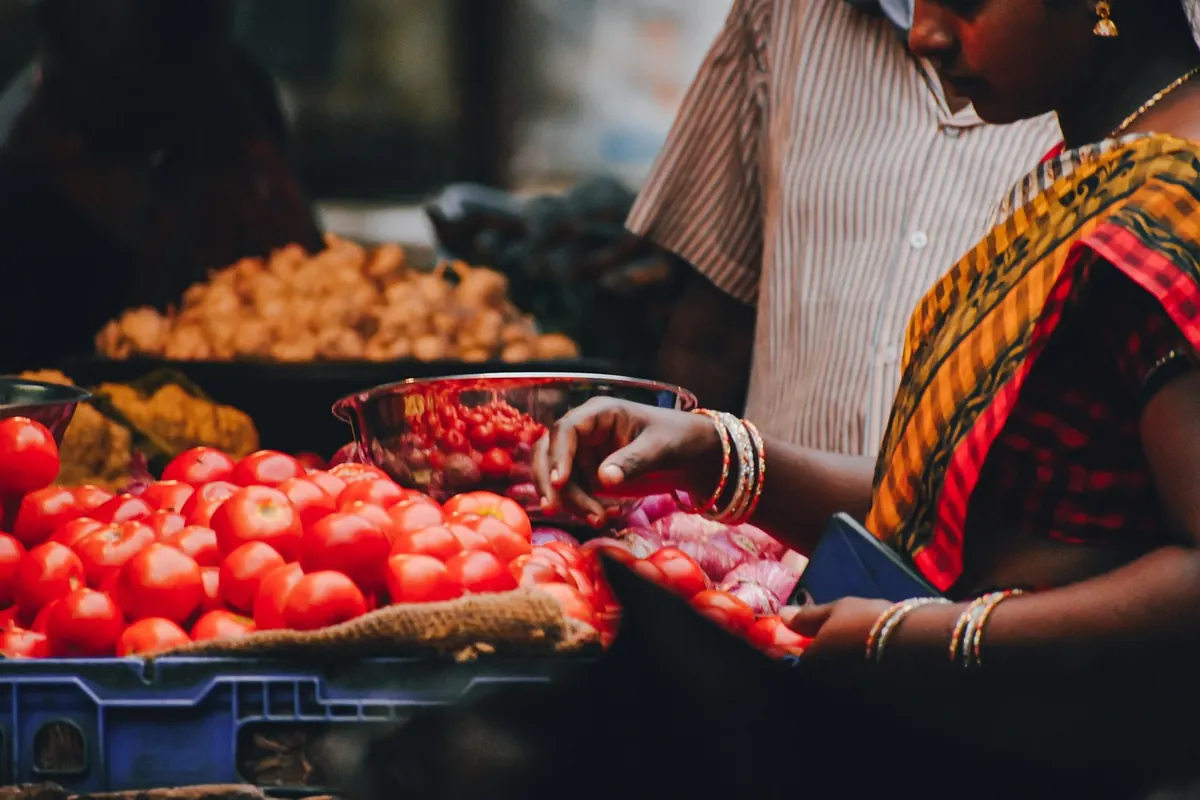
Market mornings start early and they start quietly. Vans backed up to the square, trestle tables unfolded, a tarpaulin weighed down with whatever's to hand. By ten it's loud; by one the vans are loading again. That rhythm is roughly the same in Norwich, Aylsham and Swaffham. Almost nothing else is. One is a six-day city market with a hundred-odd stalls. The others are market-town affairs where you'll recognise the same faces by your third visit. Which suits you depends on whether you want choice, conversation, or an easy Saturday morning.
Three markets, three different mornings
- Norwich — big, central, open six days a week. Best for range and for doing an actual food shop.
- Aylsham — compact and sociable, walkable end to end in under an hour. Best for a proper chat and a slow browse.
- Swaffham — generous square, west Norfolk pace, straightforward parking. Best paired with a wider day out.
All three reward an early start, and all three are worth checking before you travel: market days, stallholders and opening hours shift with the seasons.
Norwich: scale, noise and the widest choice in the county
The market sits between City Hall and the Guildhall, under that patchwork of coloured roofs, and it has traded in roughly this spot for centuries. It runs six days a week and closes on Sundays, which already sets it apart — this is somewhere you can pick up vegetables on a Tuesday, not a monthly outing.
The honest caveat is that it isn't a farmers' market in the strict sense. Some stalls sell produce brought in from wholesale, and you'll find phone cases and bedding alongside the cabbages. What the city offers is range: long-standing fishmongers, greengrocers, butchers and cheesemongers, plus a rotating line-up of street food. If you want to know where something came from, ask. Traders who grow or rear their own are usually glad to say so, and the ones who don't will generally tell you straight.
Go midweek if you can. Saturday at eleven is a crush, and queuing dulls the pleasure of a market. Arrive by nine-thirty, buy the bread and the fish first, then browse.
Aylsham: small, sociable, easy to walk
Aylsham's market place is broad and gently sloping, bookended by the church at one end and the Bure Valley Railway at the other. You can walk the whole thing properly in forty minutes, which is either a drawback or the entire point, depending on your tolerance for queues.
What you get for the smaller scale is conversation. Stallholders have time to tell you how the season is going, which apples are worth buying this week, whether the beetroot is worth waiting for. Expect seasonal vegetables from smallholdings in the Bure and Wensum valleys, free-range eggs, preserves, cakes, plants and the occasional fish van.
The town makes a good pairing. There's a proper butcher, a bakery, a couple of cafés, and a riverside walk or a narrow-gauge train ride if you've brought children. Combine the market with either and it becomes a half-day out rather than twenty minutes in a car park.
One thing to check: a town's weekly market and any farmers' market running alongside it may not fall on the same day, and the smaller the market, the more a single absence changes it.
Swaffham: west Norfolk pace
Swaffham's market place is one of the largest in the county — open enough that on a quiet weekday it can feel half empty, and busy enough on a Saturday to fill it. The town has been a trading centre for the surrounding farmland for a very long time, and the market still carries that flavour: stalls selling tools, plants, fabric and household bits alongside the food, and plenty of chat between people who have known each other for decades.
Food-wise, expect solid rather than showy — vegetables, fruit, eggs, cheese, pies, preserves and a hot food van or two. Smaller markets don't carry everything every week, so if you're after a particular cut or loaf, ring ahead or check social media that morning.
Its real strength is position. Swaffham sits within easy reach of Castle Acre, Oxburgh Hall, the Brecks and the Nar Valley, so the market slots neatly into a longer day rather than being the whole trip.
What each does best on produce
Fruit and vegetables
Norwich has the widest choice and the longest hours. Aylsham and Swaffham will have less on the table, but more of it is likely to have been grown within a few miles. Filling a box for the week? Norwich. Chasing the first asparagus or the last of the damsons? The smaller markets are often where those turn up.
Meat, dairy and bakery
Norwich's permanent traders give it the edge on butchery and fish — you can buy a whole crab or a properly aged steak without planning around a monthly date. Aylsham and Swaffham tend to be stronger on eggs, cheese, pies, cakes and preserves, sold by the people who made them. Bread sells out early everywhere; if a specific loaf matters, go in the first hour.
Street food and coffee
Norwich is in a different league here, with dozens of options and somewhere to sit afterwards. The smaller markets usually have one or two vans and a café within a minute's walk, which is often all you need.
Parking, buses and the practical faff
Norwich
City centre car parks fill on Saturdays, and what you save on a cabbage you can easily spend on a morning's parking. Park & Ride sites on the edge of the city are the least stressful route in, with frequent buses to the centre. Otherwise arrive before ten, use a multi-storey a short walk from the market, and set yourself a time limit before you start browsing.
Aylsham
The easiest of the three. Town car parks sit a couple of minutes from the market place, and some offer a free period — read the machine rather than trusting memory, because terms change. Spaces nearest the square go early on market day.
Swaffham
Parking around the market place is central but limited on Saturdays, with more a few minutes' walk out. If you're combining the market with a walk or a house visit, leave the car where you'll finish and walk in.
Cash is still useful at all three, though most stalls now take cards or a phone. Take your own sturdy bags, and keep a couple of pound coins for the car park you'd forgotten about.
Before you set out
Three habits make any of these trips better. Check the day and time on the town council or market page first, because a shut market is a wasted morning. Decide what you actually want — a full shop, one specific ingredient, or a wander — and pick the market that matches. And go early, not for bargains but for attention, which thins out fast once the queues form.
If you're new to buying this way, the simplest approach is to ask. Where was it grown? When was it picked? Is it yours? Small producers answer cheerfully, and the answers are the whole reason to shop this way. If anyone in your group has a serious allergy, ask at the stall rather than assuming — small kitchens and shared equipment are common.
Pick one, arrive before the crowd, and let the market set the pace of the morning. The rest of the day tends to follow.
Photo: udayteja7770 / Pixabay